
Apple Watch Series 12 Ceramic Repair Cost: $599 vs $899 Price (2026)
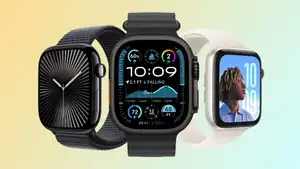
Apple Watch Series 12Apple just brought back the ceramic case after seven long years, and the internet is already arguing about whether it was worth the trip.
The announcement landed at last week's fall event, and the reaction split into two camps right away. One side cheered the return of a finish that made the Apple Watch look like actual jewelry. The other side opened the repair pricing page, did a quick calculation, and immediately regretted anything they'd said about loving ceramic.
I get both reactions. I've been around long enough to remember when the Series 5 Edition in white ceramic was basically the only way to get a watch that didn't look like it belonged to a gym bro. And I've also been around long enough to know that beautiful things have a tendency to break in ugly ways.

Seven Years Later, But the Math Changed
The last time Apple offered a ceramic case was the Series 5 Edition in 2019. The Series 6 killed it in 2020, probably because titanium was eating its lunch on the spec sheet and the Edition branding was getting awkward anyway.
Now here it is again on the Series 12. Pearl White and Night Blue. No "Edition" badge this time. Just ceramic, sitting between aluminum and... well, actually above everything else in price.
The 42mm ceramic starts at $899. The 46mm is $949. Both are cellular-only, no GPS-only ceramic option, which already tells you something about who this watch is aimed at. Compare that to the aluminum starting at $399 and the titanium at $699, and you're looking at a premium of roughly $500 over aluminum or $200 over titanium for a material that looks nicer but has some serious behavioral quirks.
Let me be clear about what ceramic actually does for you: it's insanely scratch-resistant. Zirconia ceramic clocks in at around 12 to 14 GPa on the Vickers hardness scale. Stainless steel? About 2 GPa. Your keys, your desk edge, a zipper catching the case during a rush out the door. None of it leaves a mark. The glossy finish stays glossy. Year one and year three look basically the same. For people who hate seeing their watch accumulate micro-scratches, this is genuinely appealing.
But here's the thing about ceramic that materials science won't let you forget: it's hard, not tough. Flexural strength sits around 800 to 1200 MPa, which sounds impressive until you remember that fracture toughness is only about 5 to 8 MPa times m to the half. Translation: ceramic resists scratches like a champ, but a sharp impact, whether it is a drop onto tile or a wrist hitting a door frame, and that stress concentrates at a single point and cracks start spreading. Not bending. Not denting. Cracking. And once a crack starts in a ceramic case, there's no polishing it away. No welding it back together. The whole case has to come off the watch.
So yeah. It doesn't scratch. But don't drop it. That's the entire material personality in one sentence.

$599 to Fix What You Paid $899 For
Here's where the romance of ceramic meets the spreadsheet of reality.
If you crack, chip, or otherwise damage your ceramic Series 12 and you didn't buy AppleCare+, the out-of-warranty repair for "other damage", which is Apple's catch-all term for anything that isn't a battery issue, runs $599 in the US. In China, it's 4,739 yuan. Battery replacement sits at $99 either way.
$599. For a watch that costs $899 to begin with.
You could buy a brand-new aluminum Series 12 for $399 and still have money left over. Or a used one in good condition for less. The repair bill alone would cover nearly two-thirds of the original purchase price.
And here's the part that really stings: the Apple Watch Ultra 4, Apple's actual rugged adventure watch built for people who throw themselves at mountains and reefs, costs less to repair. The Ultra 4's "other damage" without AppleCare+ is $549. A watch marketed as indestructible costs $50 less to fix than a watch designed to look pretty on a business casual wrist. The irony is almost generous in how obvious it is.
I ran the numbers a few times because I kept hoping I was misreading the support page. Same result every time. The ceramic case is the most expensive-to-repair watch in Apple's current lineup, and it's not even close. An aluminum Series 12 repair is $349, a full $250 cheaper than ceramic for the same size.
If AppleCare+ is in the picture, the math flips dramatically. The service fee drops to $69 for accidental damage on the ceramic model, and battery swaps are free once capacity falls below 80%. The monthly cost is $4.99 with theft and loss coverage, which comes to about $60 a year. Add the $69 service fee and you're looking at roughly $129 total for a complete damage incident, versus $599 without the plan.
That's a five-fold difference. Apple's not hiding this math. They're displaying it front and center on the product page, right next to the "Add AppleCare+" button. It's not a suggestion. It's the whole strategy.

It's Also Heavier and Slightly Bigger, Which You'll Feel
Before we get too deep into the repair horror story, there's another detail that matters for daily wear and it's not mentioned enough.
The ceramic case isn't the same physical size as the aluminum or titanium versions, despite being sold under the same 42mm and 46mm names. Apple's own tech specs show the ceramic 46mm measures 47 by 41 by 9.85 millimeters, while the aluminum and titanium 46mm are 46 by 40 by 9.7. One millimeter taller, one millimeter wider, and a hair thicker. The 42mm follows the same pattern, 43mm tall instead of 42mm.
The weight difference is more noticeable. The 46mm Night Blue ceramic tips the scale at 52.9 grams. The aluminum GPS plus cellular at the same nominal size is 38.6 grams. That's a 37% increase. Even compared to titanium at 44.9 grams, the ceramic is 8 grams heavier.
Eight grams doesn't sound like much on paper. But you wear this thing for 12 to 16 hours a day, and your wrist accumulates every one of them. The difference between 39 grams and 53 grams is the difference between forgetting you're wearing a watch and occasionally noticing your sleeve has shifted an inch higher than usual. I've worn heavy mechanical watches before, a Submariner-type at 155 grams, so I'm not some lightweight critic here. But a 53-gram smartwatch that you're expected to sleep in and shower with? It adds up.
And yes, the ceramic is only available in cellular configurations. If you're an iPhone user who normally leaves the phone at home on short walks and relies on GPS-only for that lightness, ceramic isn't an option for you anyway. Apple basically says: if you want the pretty case, you're also getting the always-connected lifestyle.

Who Is This Actually For?
Look, I'm not going to tell you ceramic is a bad choice. It's not. It's a very specific choice with very specific trade-offs, and the right person for it knows exactly what they're signing up for.
If you want a watch that will look essentially the same in three years as it did on day one, if you wear it mostly in office or social settings and rarely bump it into anything harder than a coffee table, if you don't mind the extra weight and you're fine spending $900 plus $60 a year on protection, the ceramic Series 12 is genuinely beautiful and probably the best-looking Apple Watch they've made in a decade.
If you ski, rock climb, lift weights, do CrossFit, work with your hands, or just have a general pattern of dropping things, the ceramic is a hard pass. Not because it is bad. It is doing exactly what ceramic does, which is resist everything except the one thing it cannot resist. A cracked ceramic case is a dead end. There's no "I'll just get it polished" workaround.
Titanium at $699 is the sensible middle ground. It's premium, it's light (44.9 grams on the 46mm), and if you crack it, the repair is $349, not exactly cheap, but not existential. The aluminum at $399 is the "I'll buy a new one before I fix this" option, and honestly, for a lot of people, that's the smartest play.
But if ceramic calls to you, buy the AppleCare+. Don't treat it as optional insurance. Think of it as part of the purchase price. $69 per incident versus $599 per incident isn't a close call. It's the difference between a scratched-up watch and a heart attack at the Apple Store service counter.
I'm not saying Apple should make ceramic more repairable. I'm saying they should stop pretending it's a casual upgrade and make it clear, from the moment you pick the color, that you're buying something that requires a different relationship with your environment. Beautiful things always do. The ceramic just makes the bill more visible.