AMD Dominates Amazon CPU Best Sellers: 19 of Top 20
What AMD’s Amazon “red wave” really means for PC gamers, DIY builders, and Intel’s comeback hopes.
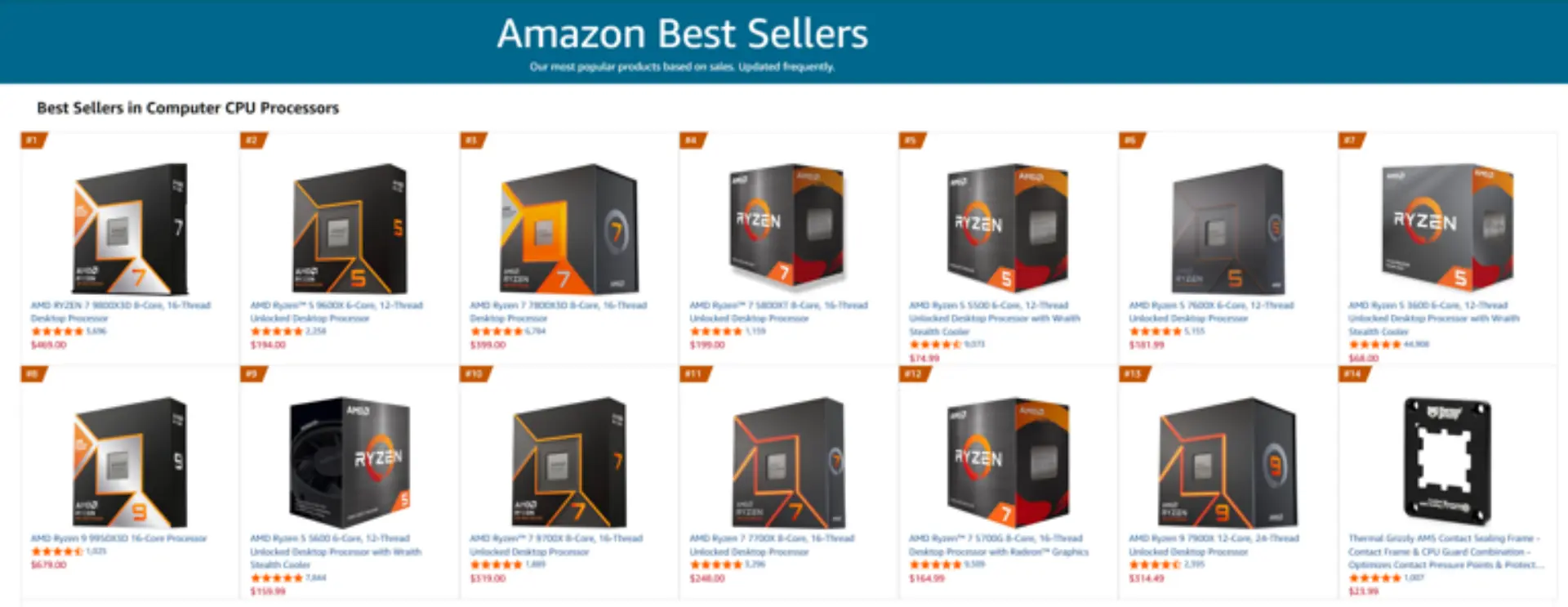
Amazon’s CPU Hot List: A “Red” Wall from Top to Bottom
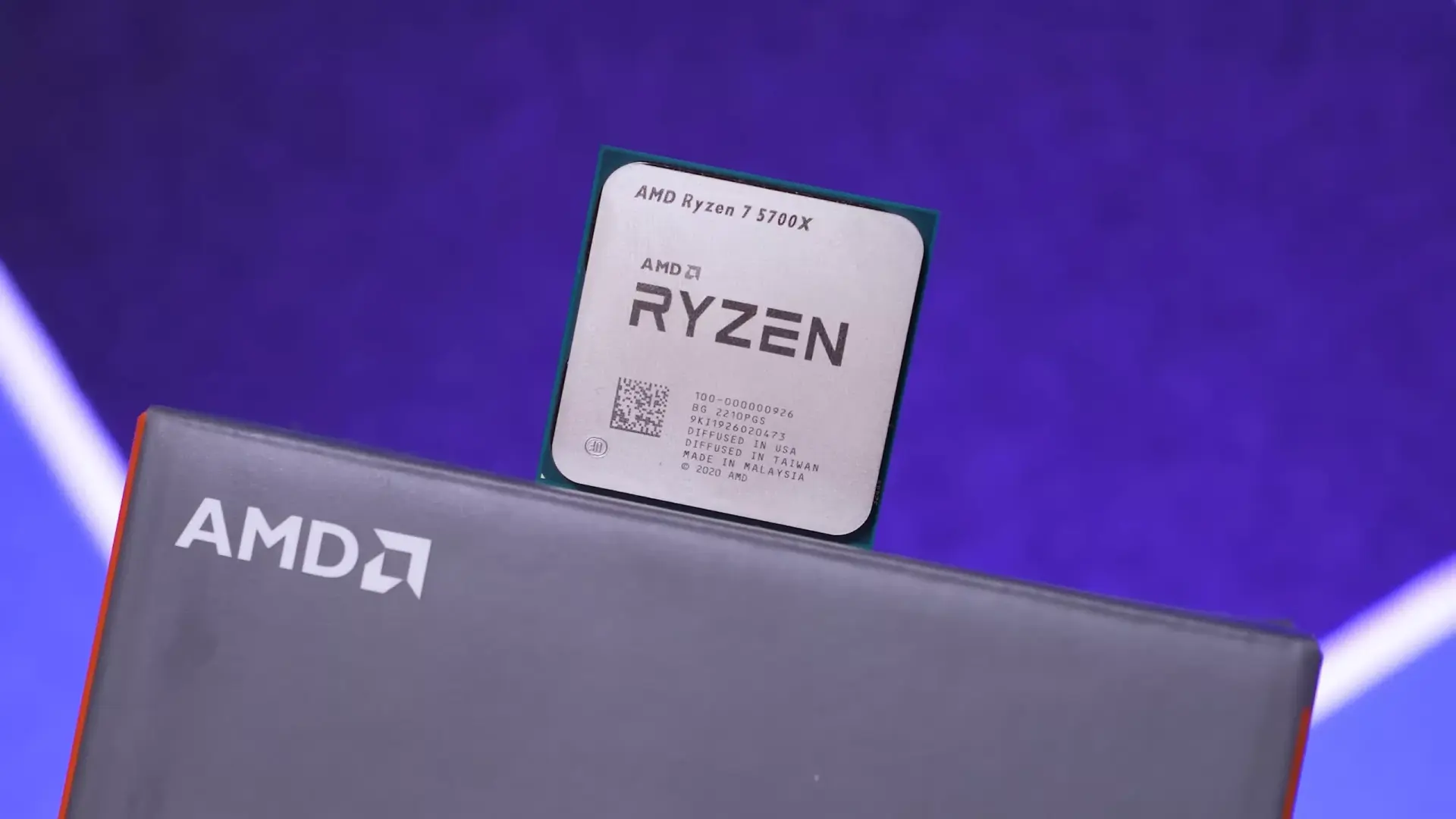
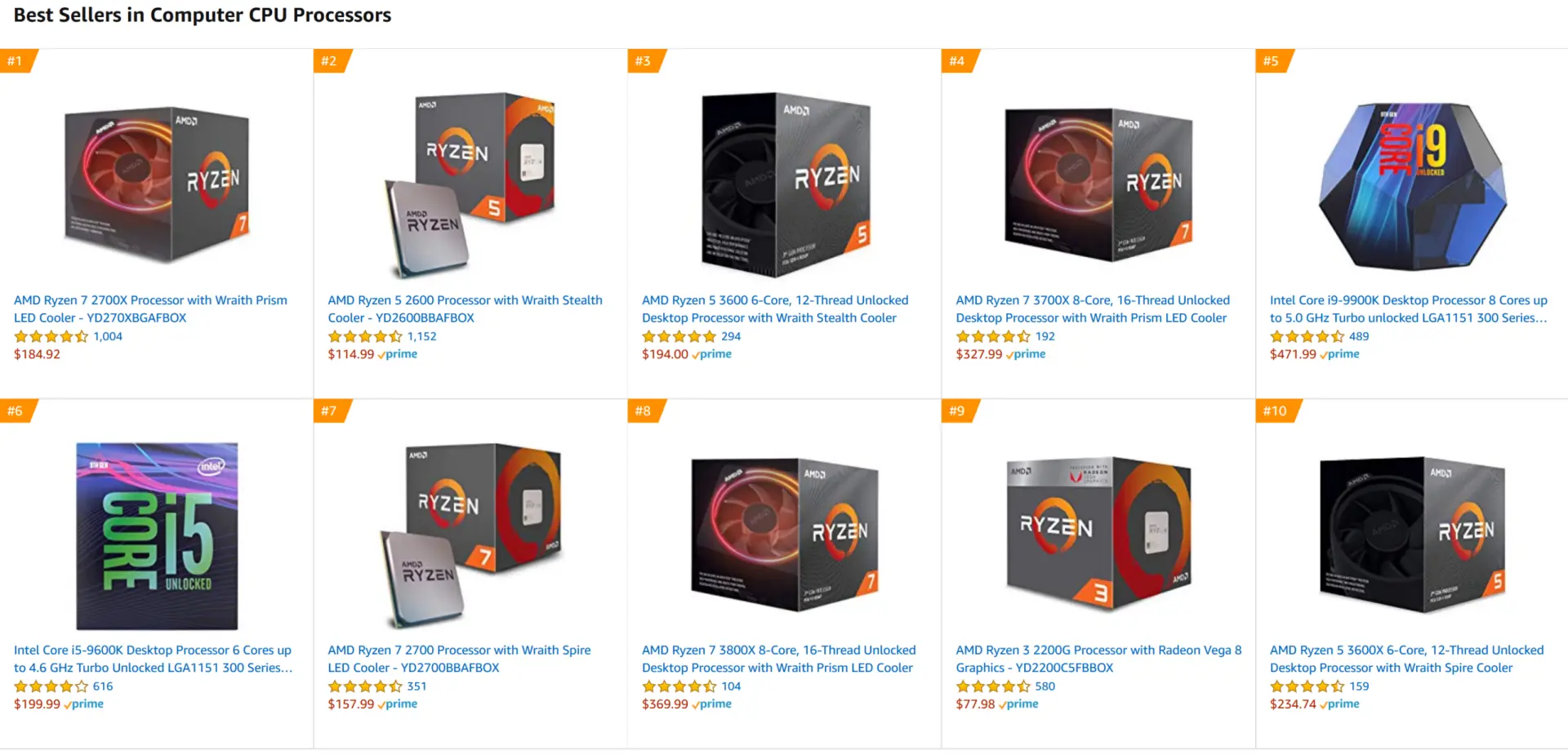
Amazon’s hourly-updated list of best-selling computer CPUs has become an unexpectedly clear scoreboard for the consumer desktop battle — and right now, it is painted almost entirely red. Recent snapshots show AMD taking all of the top 14 slots and 19 of the top 20, leaving Intel with a single place in the top tier via the Core i9-14900K.
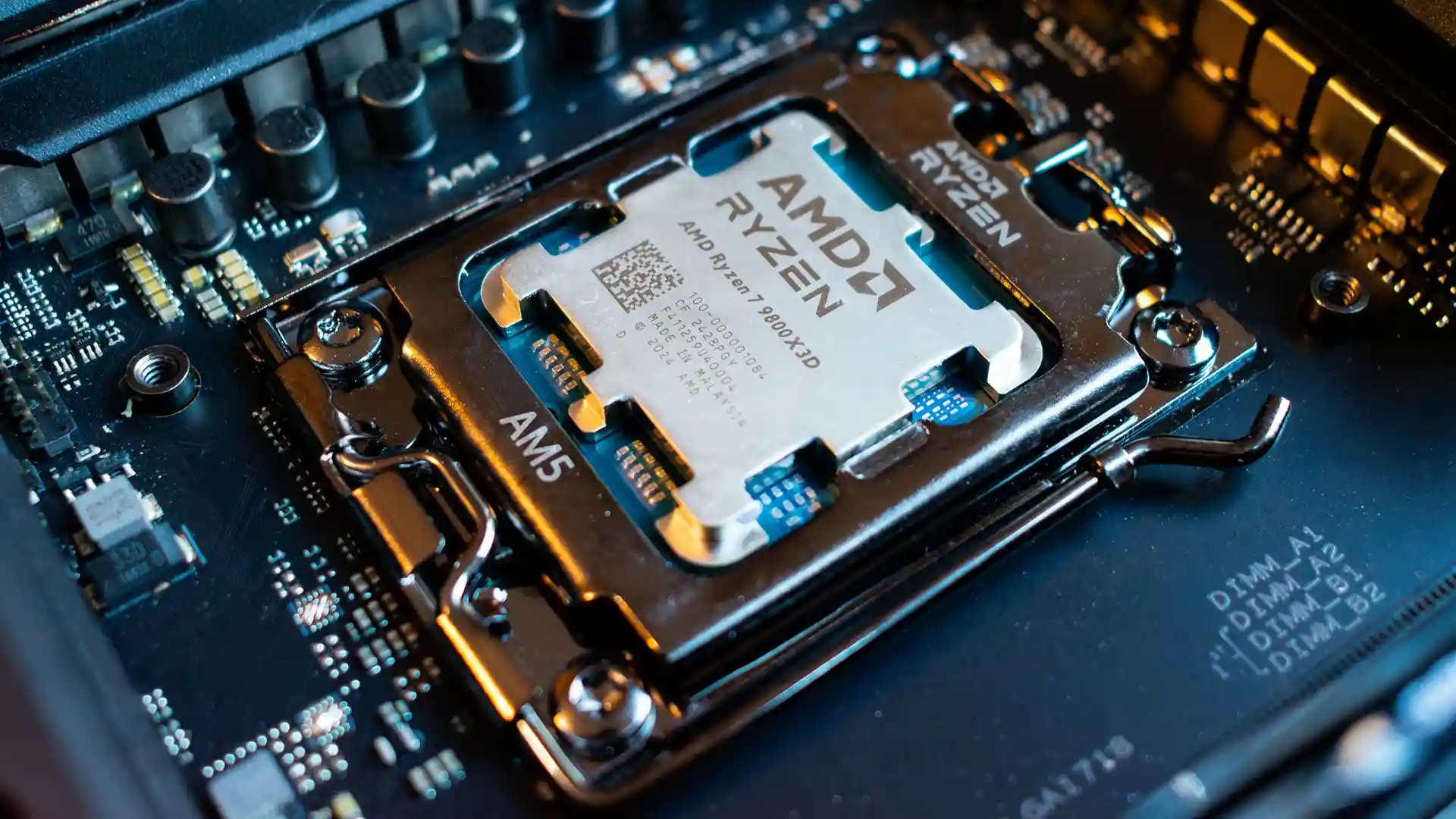
At the very top sits the Ryzen 7 9800X3D, a Zen 5 X3D processor widely reviewed as one of the fastest gaming chips on the market and a major driver of AMD’s record client-CPU revenue in 2025. In Amazon’s chart, it currently leads as the #1 best-selling CPU, priced around the mid-$400 range depending on promotions, only slightly above its typical MSRP.
The rest of the top 10 reads like a who’s-who of AMD’s recent desktop lineup: Ryzen 5 9600X and other Zen 5 parts fill several top slots, while the still-popular Ryzen 7 7800X3D holds a top-three position thanks to its strong gaming efficiency and long-standing reputation as the “sweet spot” 3D V-Cache chip. Further down the list, Zen 3 stalwarts such as Ryzen 5 and Ryzen 7 variants continue to sell strongly to mainstream builders.
Even older silicon refuses to die. The Ryzen 5 3600, a Zen 2 CPU launched back in the Ryzen 3000 era, still appears as high as seventh in the current best-seller snapshot — helped by deep discounts (as low as ~$67 recently) and the continued relevance of AM4 for budget and refurb builds.
Intel’s Lone Survivor: Core i9-14900K
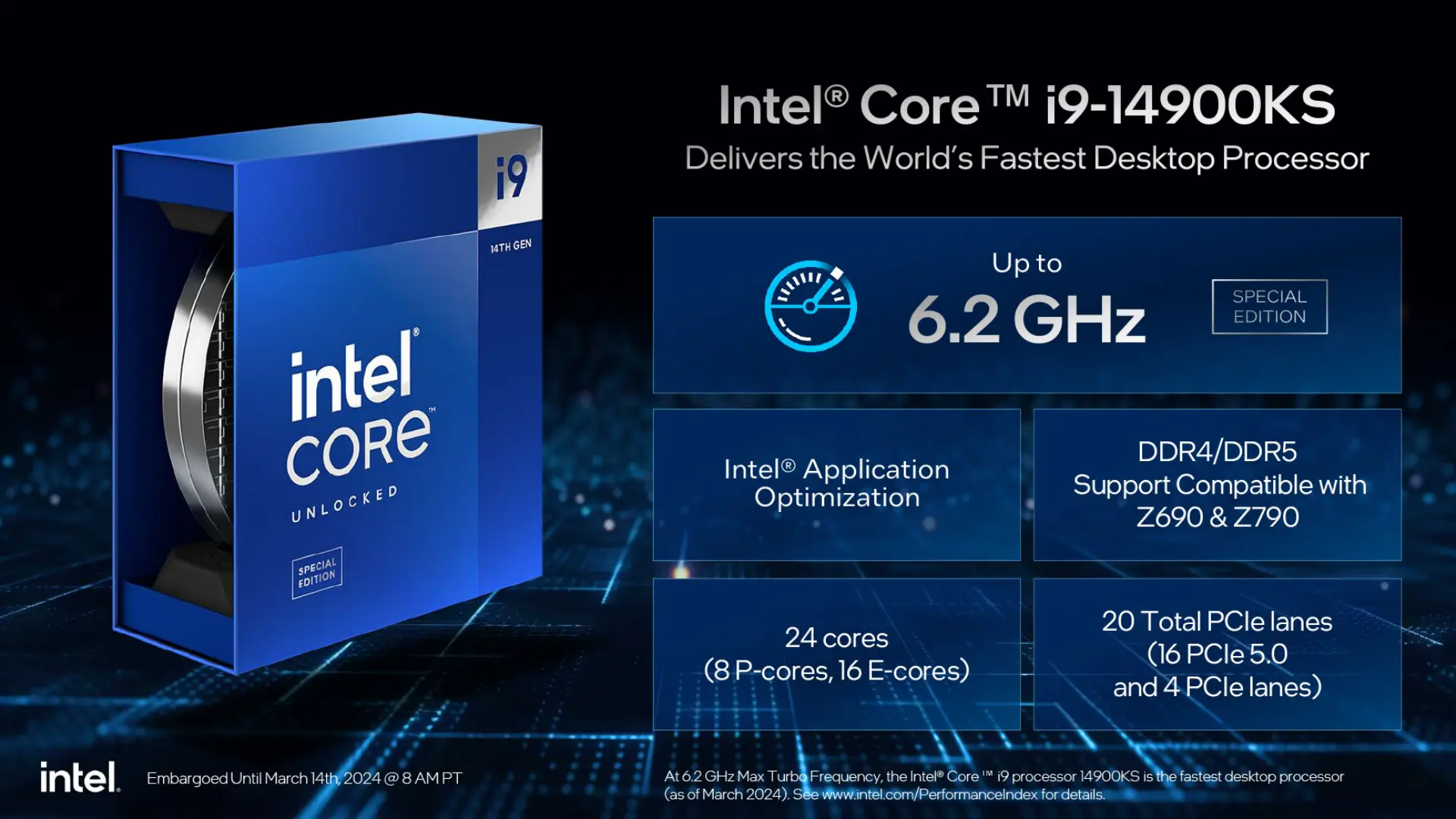
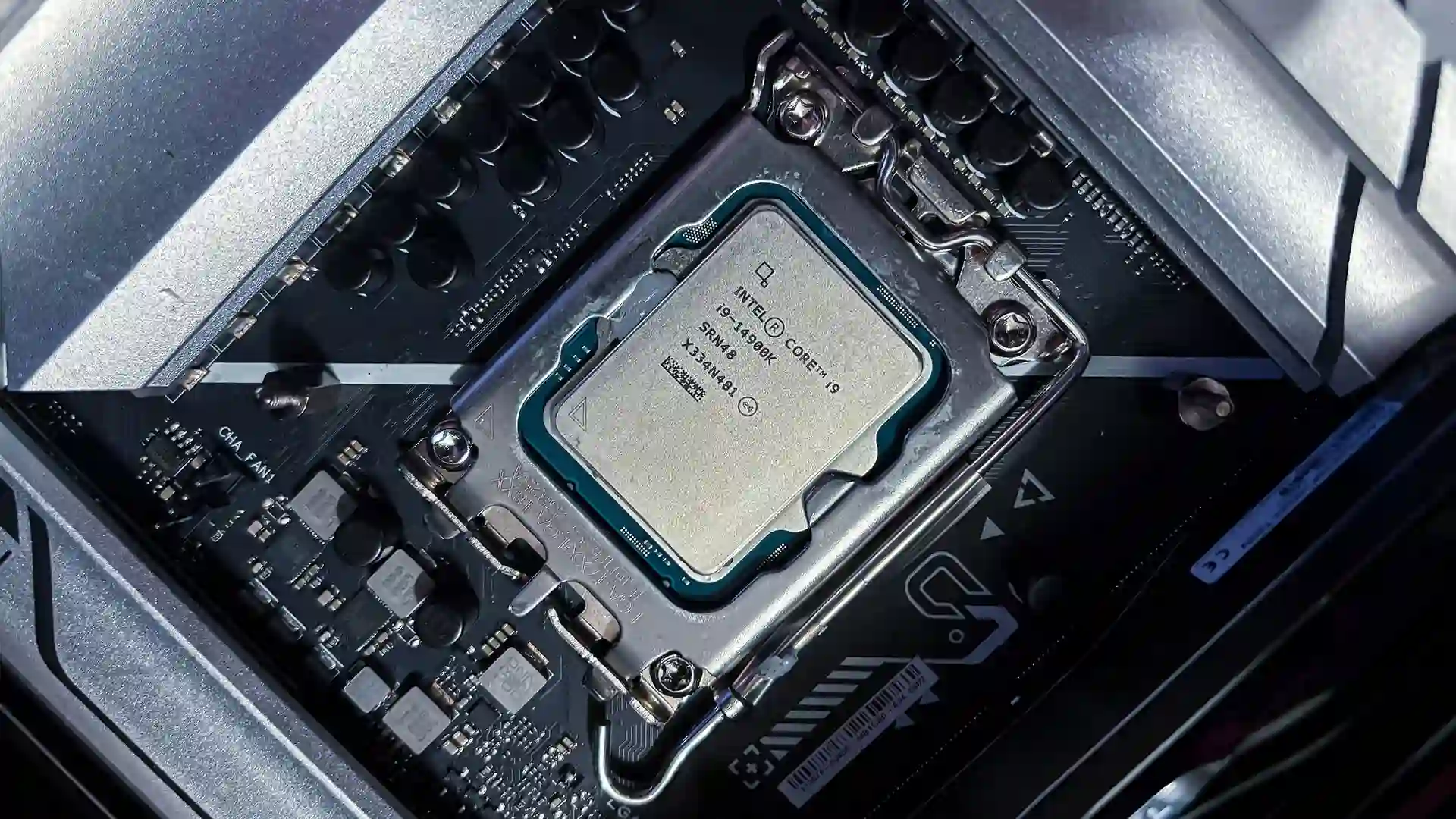
Amid this wall of AMD SKUs, Intel’s only representative in Amazon’s top 20 is the Core i9-14900K, a 14th-gen flagship that, somewhat awkwardly, now competes not just against AMD but also Intel’s own newer “Arrow Lake” desktop parts.
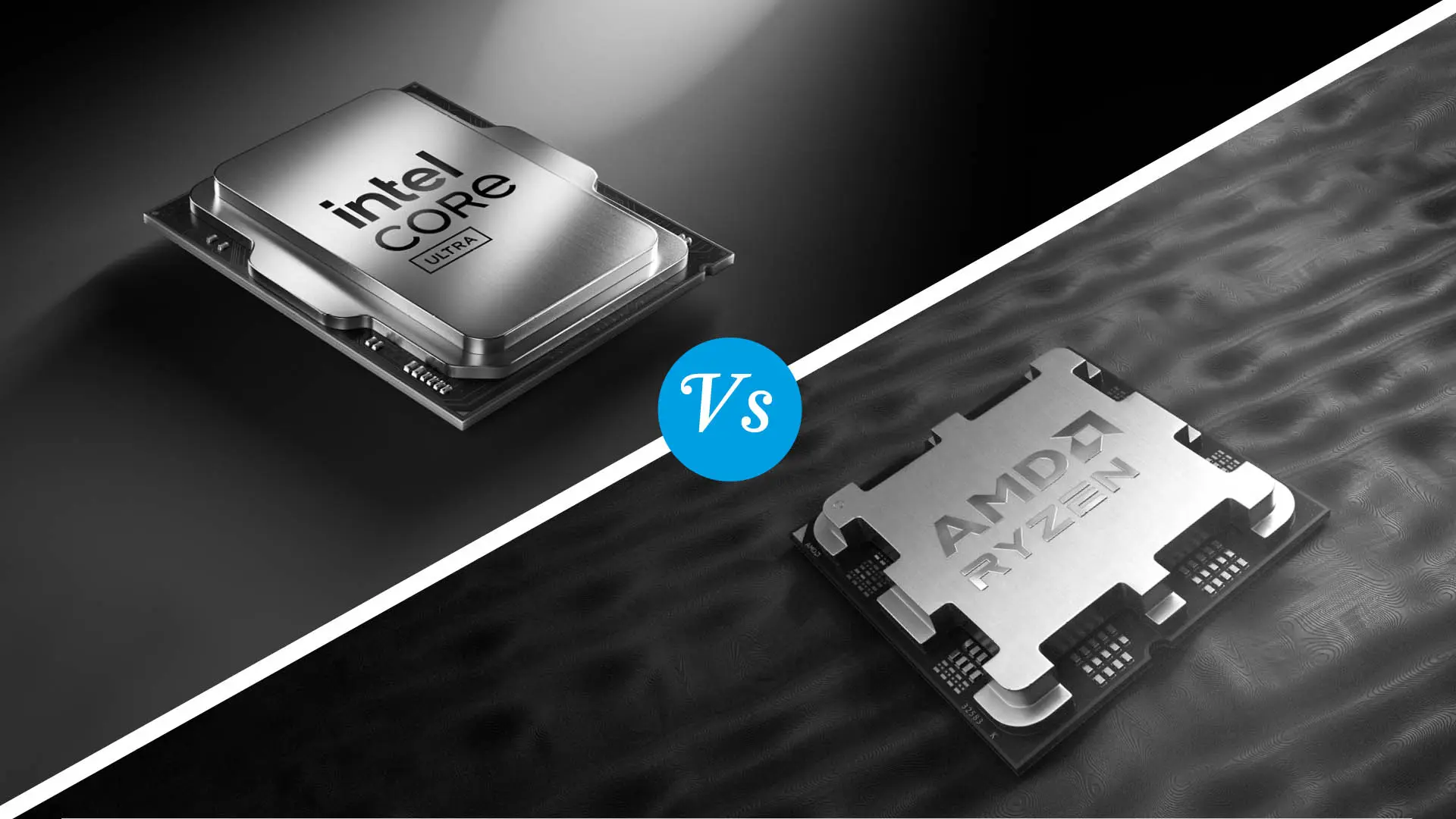
In independent testing, the 14900K has often matched or beaten Intel’s newer Core Ultra 9 desktop flagship in gaming workloads, which helps explain why many enthusiasts still gravitate toward it despite the generational branding shift. But the broader picture is hard to ignore: one Intel SKU versus nineteen AMD competitors in the top 20 suggests that, at least in the DIY retail channel, Team Blue is on the back foot.
That does not mean Intel is “dead” — OEM design wins, laptops, and enterprise contracts tell a more nuanced story — but on Amazon’s shelves, the momentum is clearly with AMD.
Beyond Amazon: Steam Surveys and German Retail Tell the Same Story
Amazon is only one indicator. To gauge real-world adoption among gamers, it is useful to look at the Steam Hardware & Software Survey. Recent results show that roughly 42.6% of surveyed Steam users now run an AMD CPU, up from around 33.8% a year earlier — a massive jump in a relatively short period.
If that trend line continues, several analysts expect AMD to overtake Intel on Steam for the first time in the survey’s history sometime in the near future. That is a projection, not a guarantee, but it reflects just how quickly AMD has closed the gap.
Over in Europe, German DIY retailer Mindfactory paints an even starker picture. In one recent November week, Mindfactory sold about 2,260 AMD CPUs versus just 220 Intel chips, giving AMD roughly a 90% share of CPU revenue for that period, with the Ryzen 7 9800X3D again topping the charts. Mindfactory has long been considered an AMD-friendly channel with aggressive promotions, but even accounting for that, the volume split underscores how decisively AMD is winning the DIY enthusiast mindshare battle.
Why Old AM4 Refuses to Die: DDR4 Economics and 5800X3D Mania
One of the more surprising side effects of AMD’s current run is the resurgence in demand for older AM4 hardware. While AM5 and DDR5 are the official way forward, there is a large installed base of AM4 motherboards and DDR4 memory — and many of those users are not ready to rip everything out for a new platform.
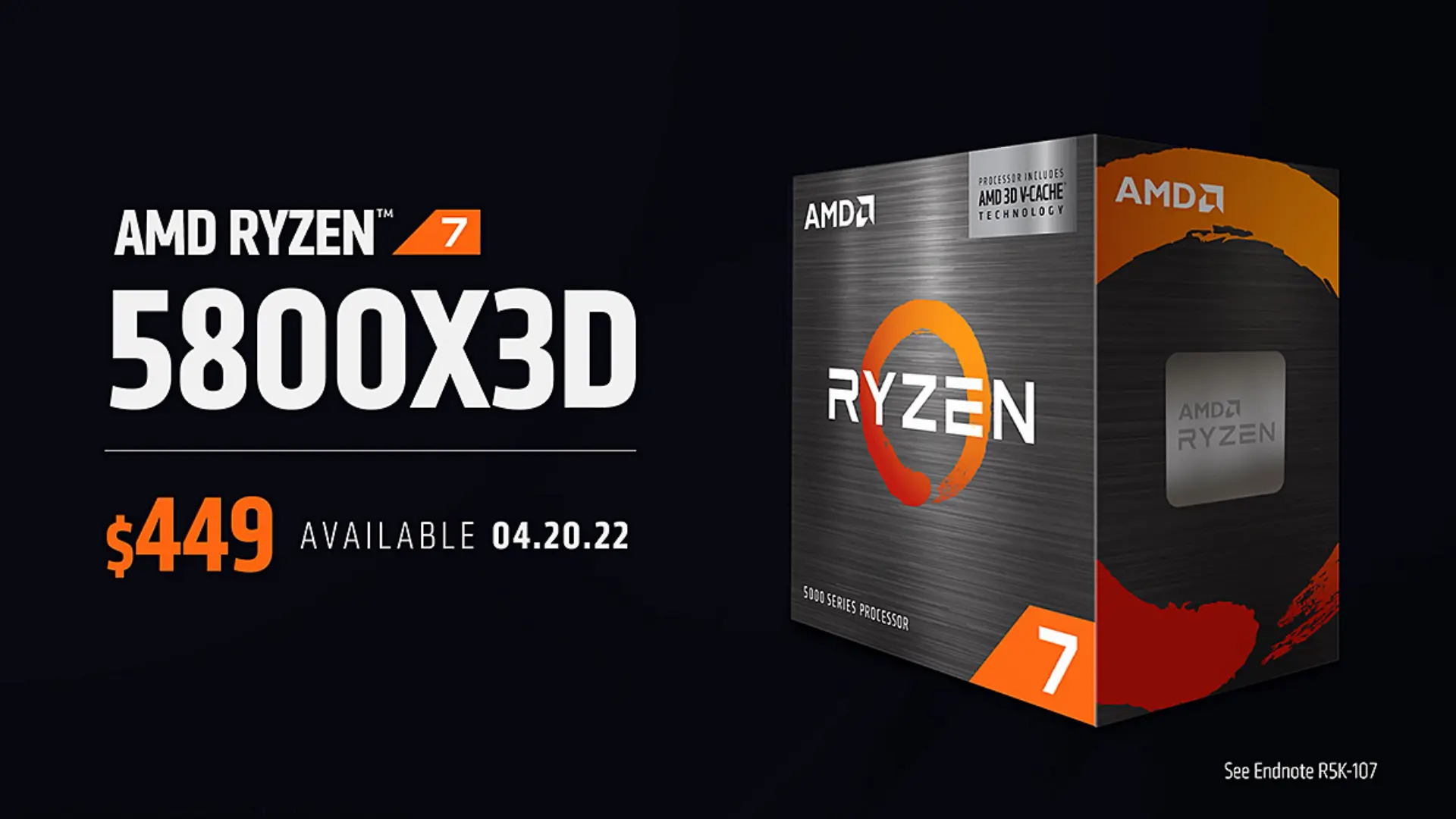
That’s where chips like the Ryzen 7 5800X3D come in. Originally launched as a “last hurrah” gaming CPU for AM4, it has become a cult favorite. Recent secondary-market tracking shows 5800X3D parts selling for up to $800 on platforms like eBay — nearly double their original MSRP — as gamers who want to avoid high DDR5 prices squeeze the last drops of performance from an existing DDR4 build.
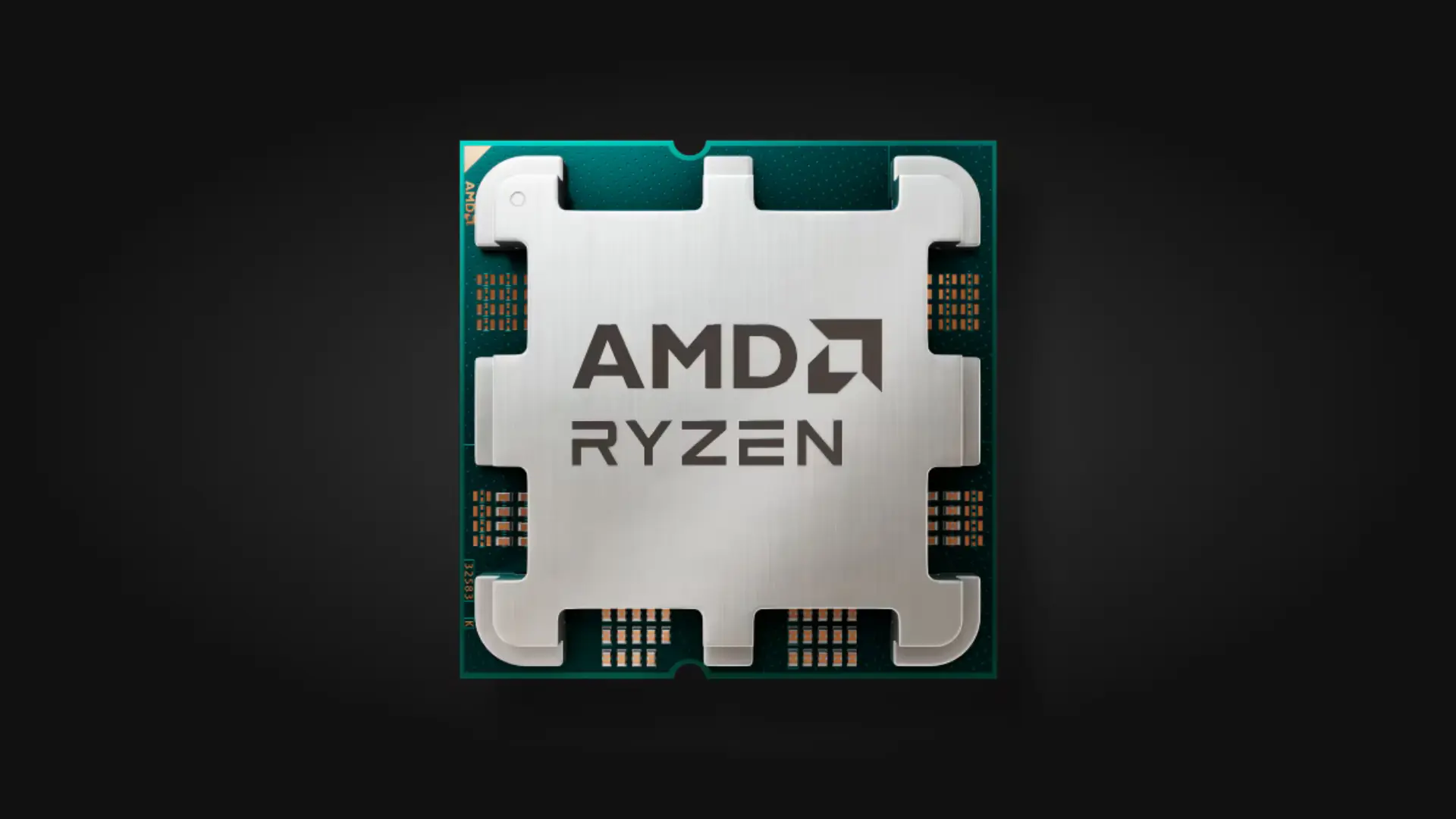
Even the more affordable Ryzen 7 5700X3D has seen elevated resale pricing, demonstrating that a significant slice of the market still prefers a cheaper CPU + DDR4 RAM combo over jumping to an all-new AM5 + DDR5 ecosystem.
For AMD, this is almost an ideal scenario:
- AM5 and Zen 5/X3D parts dominate the high-end and visible retail charts.
- AM4 and 3D V-Cache legacy parts keep older platforms attractive and extend their lifespan.
- Across both, the company maintains a compelling story around upgrade paths and total platform cost.
What This Means if You’re Building or Upgrading a PC
From a builder’s perspective, Amazon’s bestseller list is not a pure technical ranking, but it is a powerful signal of where price-to-performance and “mindshare” currently intersect.
For high-end gamers and creators
- If you want top-tier gaming performance on a modern platform, Ryzen 7 9800X3D and other Zen 5 X3D parts are clearly resonating with buyers, and that aligns with independent performance data showing excellent gaming and strong creator workloads.
- Intel’s Core i9-14900K remains a capable high-end chip and the company still leads in some specific workloads, but in the DIY retail channel its popularity is being squeezed hard by AMD’s 3D V-Cache lineup.
For budget or “value-max” builders
- Dirt-cheap Zen 2/Zen 3 parts like the Ryzen 5 3600 can still make sense for repair, refurb, or ultra-budget builds, especially when they drop below the $70 mark with coolers included.
- If you already own an AM4 motherboard and DDR4, a used or discounted 5800X3D or 5700X3D can deliver near-modern gaming performance without paying DDR5 prices — but you’ll need to watch the resale market carefully to avoid overpaying.
For upgraders deciding between Intel and AMD
The current retail data does not mean Intel is suddenly a bad choice; it does mean AMD’s overall value proposition — performance + pricing + platform longevity — is resonating more strongly with DIY buyers right now. Intel could respond with more aggressive pricing, new architectures, or better platform bundles, but as of the latest Amazon and retail snapshots, AMD is clearly ahead.
Will AMD’s “Red Reign” Last?
Hardware markets move in cycles. Intel still has deep resources, strong OEM relationships, and upcoming architectures that could shift the narrative again. Likewise, DDR5 pricing, motherboard availability, and new GPU launches can all influence which CPU “makes the most sense” in a given budget band.
What we can say with confidence — based strictly on the data in front of us — is this:
- AMD is dominant on Amazon’s CPU bestseller chart, owning 19 of the top 20 spots.
- AMD is closing in on parity with Intel in the Steam survey, and may surpass it if current trends continue.
- In key DIY channels like Mindfactory, AMD has already achieved overwhelming share in both units and revenue.
Taken together, these signals suggest that, for now, we are living in an AMD-led era in the enthusiast and DIY desktop space. For gamers and PC builders, that translates into more competitive pricing, stronger options at every budget level, and a market where Intel has no choice but to fight back — which ultimately benefits everyone.
Quick Q&A
1. Does AMD’s dominance on Amazon mean Intel is “over”?
No. It means AMD is currently winning in DIY-retail momentum, especially among gamers and enthusiasts. Intel still sells huge volumes through OEMs, laptops, and enterprise, and remains competitive or leading in some workloads. Amazon’s list is a very important signal, but not the entire market.
2. Is it still worth building an AM4 system in late 2025?
If you already own AM4 parts (board + DDR4), upgrading to a high-end chip like the 5800X3D can be a very smart move if the price is reasonable. For completely fresh builds, however, many users will be better off going to AM5 or an Intel DDR5 platform for longer-term upgrade paths.
3. Will AMD overtake Intel on the Steam survey?
Steam’s latest data shows AMD around 42.6% CPU share, up from roughly 33.8% a year earlier. If that trend persists, AMD could surpass Intel, but that outcome depends on future launches, pricing, and user upgrades — it is a plausible scenario, not a guaranteed one.